Getting started with electronic music production can seem daunting, but it’s a wild and exciting ride 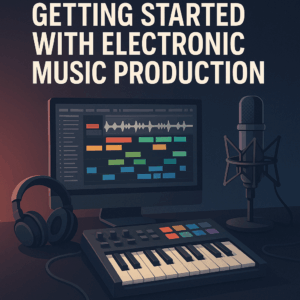 to create beats that get people moving. Behind every legendary track is a world of genres, from house to techno, dubstep to trance, each with its own unique flavor and vibe.
To start, you don’t need a full studio. All you really need is a solid computer and some software called a DAW, which stands for Digital Audio Workstation. Think of DAWs as the canvas where you’ll paint your music. Ableton Live, FL Studio, and Logic Pro are some faves among producers. Pair that with a MIDI controller—a keyboard that talks to your software—and you’re good to go. Don’t get lost in the endless plugins and effects just yet; start simple and build from there.
Hear sound jargon like ‘analog’ and ‘digital’ and wonder what that’s about? Analog refers to traditional, more classic sound equipment, while digital leans towards the accessible world of software instruments and tools. Each has its charm, but for total beginners, digital is often the go-to because it’s easier and cheaper to handle.
Sure, you can slam out beats and rhythms by ear, but understanding some music theory won’t hurt. Knowing the basics like beats, notes, and patterns can make your tracks sound more professional. The beat is the heart of any tune, maintaining the groove while notes and patterns create the melody and harmony.
Ready to create your first track? Start small: lay down a simple beat, experiment with synth sounds, and layer in melodies and bass lines. Let creativity flow and don’t be afraid to make something weird or different. The best tracks often start as happy accidents. Keep it fun and learn to enjoy the process.
Mastering the Tools and Techniques
Digital Audio Workstations (DAWs) are the playground of electronic music production. Each DAW has its quirks. Ableton Live is fantastic for live performances and quick session views, while FL Studio offers an intuitive step sequencer that’s great for beatmaking. Logic Pro is a favorite for Mac users with its robust suite of tools. Get to know your DAW like the back of your hand since it’s where your tracks come to life.
Synthesizers and samplers open up a universe of sounds. Synths create tones from scratch, offering endless customization. Whether you’re into thick, bass-heavy sounds or crisp, high leads, experimenting with synths like Serum or Massive can help shape your sonic identity. Samplers, on the other hand, let you use existing sounds to build something new. Check out samples online or record your own.
MIDI is the unsung hero of electronic music. It’s a language that lets your digital instruments communicate and work in harmony. Learning how to map MIDI controls can elevate your workflow, turning your gear into an orchestra at your command.
Layering tracks is all about building depth. Start with the basics: bass, drums, melody, and then add complementary elements like pads or effects. Each layer brings something unique to the mix, so balance is key. Don’t let any one element overpower the mix unless it’s intentional for parts like a solo or drop.
Sound design and mixing are where you refine your tracks into polished gems. Mixing involves balancing levels, panning, and equalizing sounds to achieve clarity and cohesion. Sound design turns basic sounds into something more dynamic and interesting through effects like reverb and delay. Take it one step at a time and let your ears be the judge.
Getting Started With Electronic Music Production – Developing Creativity and Refining Your Sound
Creating a unique sound takes time, but it’s what makes music truly yours. Dive into different styles and genres, borrow inspiration from other artists, and infuse your own ideas. Experiment with various techniques until you start seeing patterns in what appeals to you.
Studying iconic producers gives you insight into the craft. Whether it’s Daft Punk’s futuristic grooves or Aphex Twin’s complex arrangements, there’s a lot to learn from the pros. Analyze their work, try to understand their process, and don’t shy away from recreating tracks as practice. As you consider getting started with electronic music production, this will be paramount.
Learning resources are your best friends. Online courses, streaming tutorials, and digital communities are treasure troves of knowledge where you can pick up new skills and techniques. Platforms like YouTube or Reddit can be gold mines for tips and tricks that improve your production prowess.
Embrace experimentation and innovation. Push your creative boundaries by flipping standard sounds into surprising results. Whether it’s remixing a classical piece with electronic beats or sweetening a harsh noise for ambient listening, innovation is key. Let failure be part of the process, a stepping stone to mastery.
Every producer faces challenges, whether it’s writer’s block, technical issues, or just feeling uninspired. The goal is to keep pushing through. Break the monotony by switching up your projects, collaborating with other artists, or even just stepping away for a breather. Remember, creativity comes in waves, and persistence is part of the journey.